
what's in that protein bar?: a question we will regret asking more and more
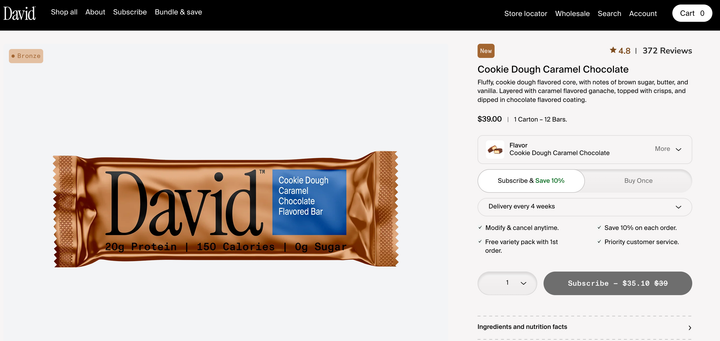

There’s a new protein bar brand that’s been circulating for a few months claiming to have the fewest calories (150) relative to its protein content (20 grams) of any protein bar you can buy. The branding (”David,” written in Apple’s “think different” font) is slick. They are promoted by extremely famous podcaster Andrew Huberman, who, according to my careful research, may be the actual Antichrist. A single bar costs $4.50 at my local sundry shop. What could go wrong?
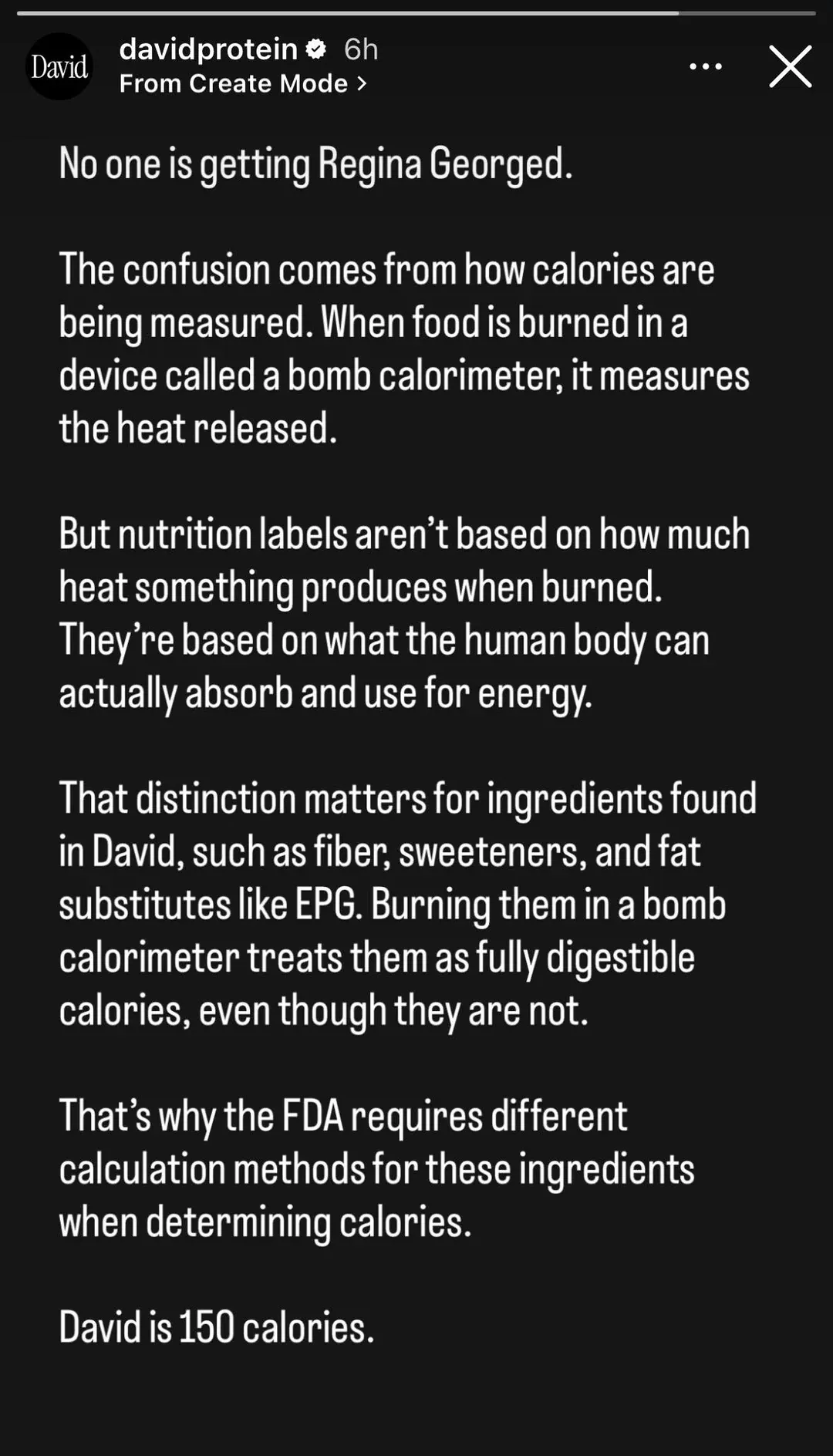
Well—a class action suit was filed against David in January, alleging that the bars actually contain between 263 and 275 calories, including an additional 10 grams of fat not reported on the nutrition label. And far be it for a supplement to lie, of course. Recently, David posted from its Instagram account claiming that the suit was simply measuring wrong by using what is called a bomb calorimeter. “David is 150 calories,” the brand confidently stated.
Who is right? Well, I am not David, or the law, or a disgruntled customer, but I have a theory.
First, we need to understand how calories are measured. Calories are a measure of energy, and we measure the energy in food using a contraption called a bomb calorimeter. A bomb calorimeter essentially burns up the food in question, literally, and then tells you how much energy was trapped inside the material burned. As you might guess, this is not a perfect analog for how bodies use food, which will come into play in a moment. But it is pretty good. The way most nutritional information is put together uses stock bomb-calorimetric figures that were created long ago, because food ingredients don’t really change—if you are using the same kind of all-purpose flour in your bread, and the same yeast, and the same stone-ground wheat, you don’t have to re-bomb-calorimeter your bread once you make it. You just take the existing figures for flour, yeast, and wheat, add them together, and boom, you have the nutritional info for your bread.
Now, the relevant fly in the ointment for a bomb calorimeter, in this case, is that it cannot distinguish between food and not-food the way our bodies can. If you put a hunk of wood in a bomb calorimeter, it will burn it up and say the wood has 1,000 calories.[^1] But if you were to eat the hunk of wood, it would just pass through your digestive system and come out the other end mostly intact, if a little wet, because our bodies can’t make energy out of wood. (If only!)
This is where things get good. Remember that the nutrition labels for the David protein bars claim a caloric content of 150 calories or so. David customers thought something fishy might be going on, so they put the David protein bars into a bomb calorimeter, and the bomb calorimeter said the bars actually had 275 calories. The customers got mad and they filed a class action suit. Can you guess what happened? I will give you a moment to contemplate the answer to this science mystery.
. . .
We can't have bots here.
Let's see some ID. (Just your real email, please.)